

Architectural Perforated Metal - Decorative Panels, Facades, Ceilings, and Partitions
Truji Architectural Decorative Mesh Co. supplies architectural perforated metal, offering a versatile solution for both decorative and functional applications in modern architecture. Our perforated metal products are available in various classifications, including decorative panels, facades, ceilings, and partitions, designed to meet diverse design needs. Made from materials such as stainless steel, aluminum, and mild steel, these products provide durability and strength, with options for different hole sizes and patterns. The features of our architectural perforated metal include excellent ventilation, natural light filtration, and privacy enhancement, making them ideal for both indoor and outdoor use. We provide product customization and inquiry, welcome to negotiate.
Architectural Perforated Metal Specifications
- Material Types: Stainless steel, aluminum, and mild steel.
- Thickness: From 0.5 mm to 3.0 mm, with 1.0 mm to 2.0 mm being most common.
- Hole Patterns: Round, square, and slot shapes, with sizes from 1 mm to 20 mm.
- Hole Size: Ranges from 1 mm to 20 mm, with 3 mm, 5 mm, and 10 mm being common.
- Open Area: From 30% to 80%, depending on the application.
- Sheet Sizes: 1000 mm x 2000 mm, 1200 mm x 2400 mm, and 1500 mm x 3000 mm.
- Edge Finishing: Raw, hemmed, or rolled.
- Coating Options: Powder coating, anodizing, and galvanizing.
- Weight: From 2 kg/m2 (aluminum) to 12 kg/m2 (stainless steel), depending on material and thickness.
- Hole Pitch: Ranges from 2 mm to 50 mm, depending on the design.
- Tolerance: Typically ±0.5 mm for thickness and hole diameter.
- Material Grades: Stainless steel grades SS304, SS316, and SS430; aluminum grades 1050, 3003, and 6061.
- Strength and Durability: Tensile strength from 250 MPa to 550 MPa.
- Corrosion Resistance: Stainless steel and aluminum are highly resistant to corrosion.
- Fire Resistance: Stainless steel and aluminum are fire-resistant and meet safety standards.
Picture Display and Description
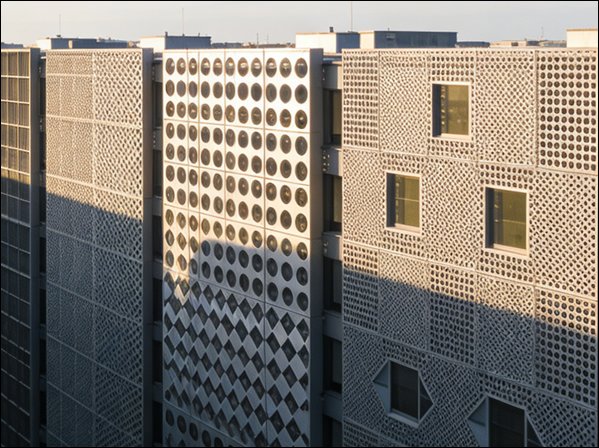
Custom Circular Perforated Aluminum Panels For Commercial Building Exterior Facade
- Material: Architectural 3003-H14 Aluminum or Stainless Steel.
- Perforation Shape: Round / Circular holes in a staggered pattern.
- Hole Diameter: 5.0mm - 50.0mm. The width of the individual circular punches.
- Pitch (Center-to-Center): 10.0mm - 80.0mm. The distance between the middle of two holes.
- Panel Thickness: 2.0mm - 4.0mm. Standard gauge for exterior structural rigidity.
- Open Area Percentage: 20% - 50%. Regulates light filtration and privacy levels.
- Surface Finish: PVDF Coating or Powder Coated Silver/Gray.
- Panel Dimensions: 1200mm x 2400mm. Standard large-format exterior sizing.
- Mounting System: Concealed fastener system with aluminum sub-frames.
- Application: Exterior building envelopes and decorative privacy screens.
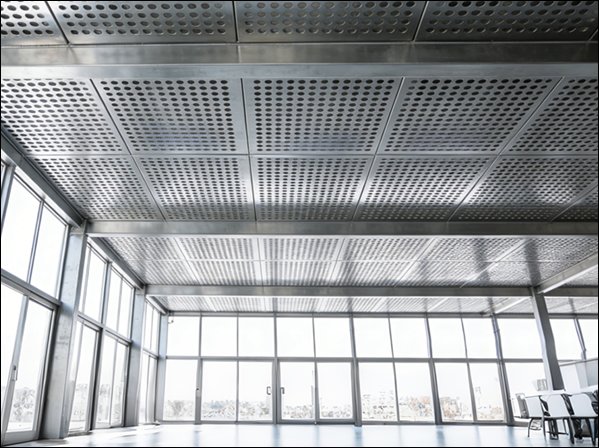
Suspended Perforated Metal Ceiling Tile For Interior Commercial Office Lighting Design
- Material: Lightweight Aluminum or Galvanized Steel.
- Hole Pattern: Micro-perforation (Round or Square).
- Hole Diameter: 1.0mm - 3.0mm. Tiny holes for a clean, smooth appearance.
- Panel Size: 600mm x 600mm. Standard modular drop-ceiling tile dimensions.
- Material Thickness: 0.7mm - 1.2mm. Thin and light for safe overhead hanging.
- Acoustic Backing: Integrated black non-woven acoustic fleece for sound absorption.
- Edge Profile: Lay-in, Tegular, or Clip-in hidden edges.
- Finish: Metallic Silver Powder Coat.
- Air Transparency: 15% - 25% Open Area. Allows HVAC systems to breathe.
- Application: Corporate offices, airports, and high-end retail interiors.
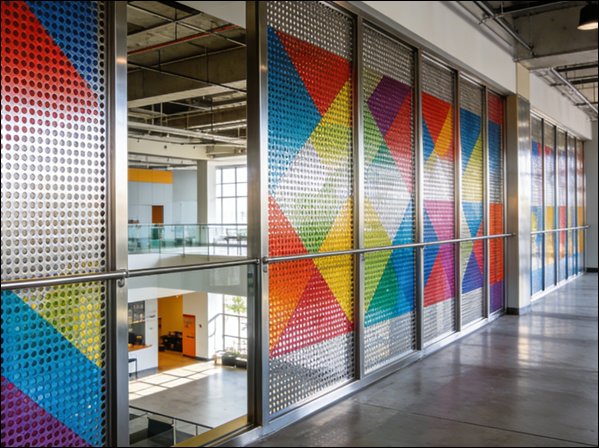
Geometric Multi-Pattern Perforated Metal Partition Walls For Interior Space Division
- Material: Cold Rolled Steel or Anodized Aluminum.
- Pattern Style: Mixed Geometric (Circles, Diamonds, and Squares).
- Variable Hole Sizes: 10mm - 100mm. Uses different sized holes to create art.
- Panel Thickness: 1.5mm - 3.0mm. Sturdy enough to stand as a wall.
- Border Margin: 20mm - 50mm. Solid metal edge around the pattern for framing.
- Visual Transparency: 30% - 45%. Balances privacy with an open-room feel.
- Color Treatment: RAL Powder Coating.
- Frame Integration: Welded perimeter tube frame for floor-to-ceiling mounting.
- Panel Alignment: Vertical orientation with seamless butt-joints.
- Application: Office room dividers, lobby art, and restaurant partitions.
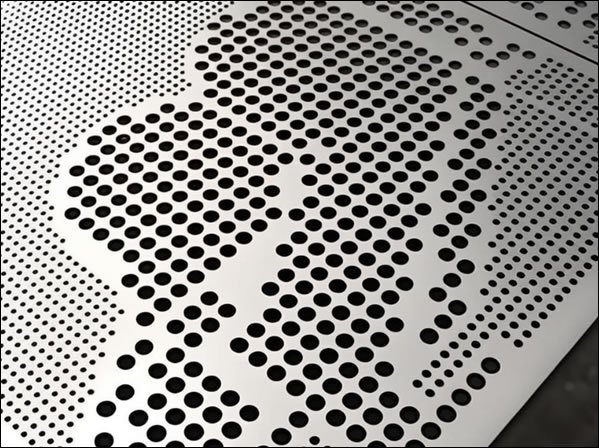
Graduated Image Hole Perforated Metal Sheets For Custom Architectural Artistic Facade
- Material: 5052-H32 Marine Grade Aluminum.
- Perforation Method: CNC Precision Punching or Laser Cutting.
- Hole Gradient: Variable density to create "pixelated" images or shapes.
- Smallest Hole: 2.0mm. Used for the detailed parts of the "image."
- Largest Hole: 25.0mm. Used for the lighter/open parts of the design.
- Panel Thickness: 3.0mm. Standard for high-definition image clarity.
- Surface Finish: Natural Anodized or Clear Matte Coating.
- Light Transmission: Varies by design (typically 20% - 40%).
- Fabrication: Custom cut-to-size based on architectural CAD drawings.
- Application: Landmark building facades and decorative metal murals.
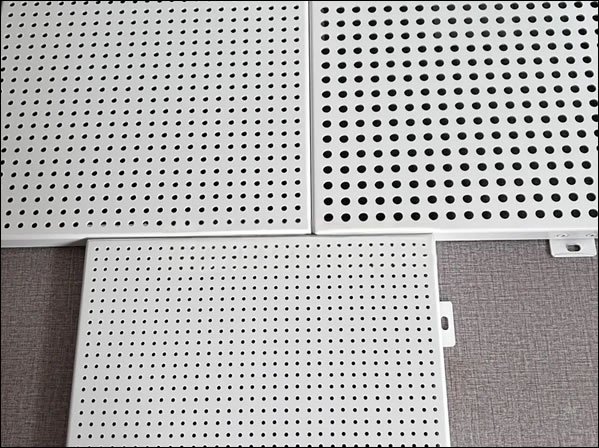
White Round Hole Perforated Aluminum Ceiling Panels For Clean Room Ventilation
- Material: High-Purity Aluminum Sheet.
- Hole Shape: Perfect Round in a 60-degree staggered layout.
- Hole Diameter: 2.0mm - 5.0mm. Medium-small holes for high airflow.
- Panel Spacing: 600mm Width. Designed to span long ceiling sections.
- Sheet Thickness: 1.0mm - 1.5mm. Optimized for weight-to-strength ratio.
- Open Area: 40% - 60%. High percentage for maximum air circulation.
- Coating: Antibacterial White Powder Finish.
- Maintenance: Washable surface resistant to moisture and chemicals.
- Fixing Method: Torsion spring or screw-fix concealed system.
- Application: Hospitals, laboratories, and modern kitchen ceilings.
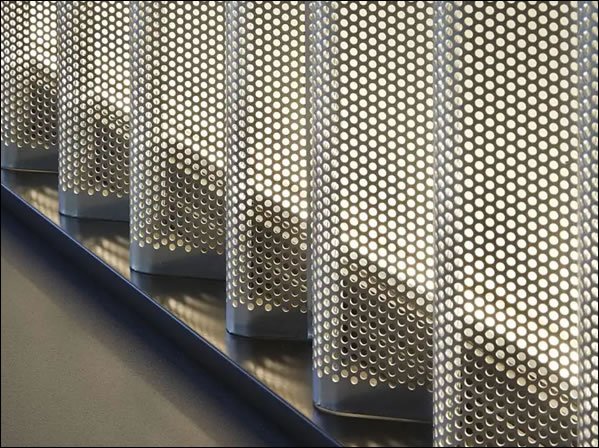
Corrugated PerforCorrugated Perforated Metal Facade Panels For Architectural Facade Panels
- Material: Pre-painted Galvanized Steel or Zinc.
- Profile Shape: Sinusoidal (Wave) or Trapezoidal (Box) corrugation.
- Hole Size: 3.0mm - 8.0mm. Standard architectural perforations.
- Pitch of Waves: 75mm - 150mm. The distance from one "wave" peak to next.
- Depth of Profile: 15mm - 50mm. Adds 3D depth to the building wall.
- Material Gauge: 0.8mm - 1.5mm. Thinner metal is used because the "waves" add strength.
- Transparency: 25% - 35% Open Area. Creates a shimmering effect.
- Coating: Metallic PVDF or Weather-resistant Polyester.
- Orientation: Can be installed horizontally or vertically for different looks.
- Application: Exterior siding for warehouses, museums, and showrooms.
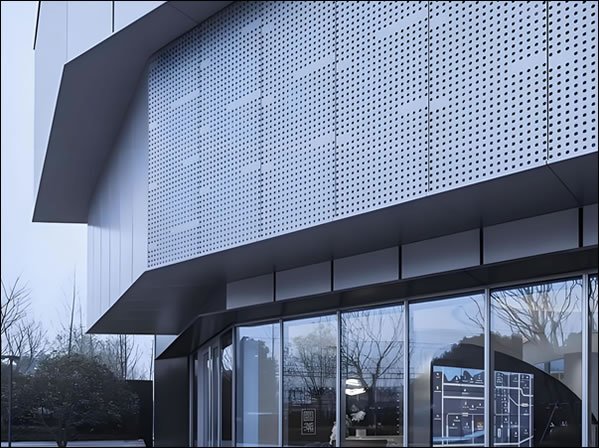
Square Hole Perforated Metal Exterior Walls For Building Envelope Architecture
- Material: Stainless Steel 304/316 or Powder Coated Steel.
- Hole Shape: Precision Square or Rectangular punches.
- Hole Size: 10mm x 100mm. Long vertical slots for a modern look.
- Bar Width: 5mm - 15mm. The solid metal strips between the holes.
- Panel Thickness: 2.5mm - 4.0mm. Heavy gauge for wind-load resistance.
- Open Area: 30% - 55%. Balanced for visibility and shading.
- Surface Finish: Matte Black or Charcoal Powder Coat.
- Fastening: Exposed architectural bolts for an industrial aesthetic.
- Panel Height: Up to 4000mm. Custom tall panels for seamless walls.
- Application: Parking garage screens and modern residential facades.
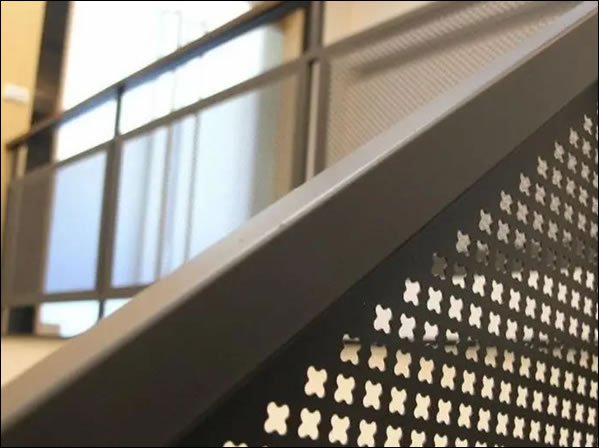
Cross Pattern Perforated Metal Infill Panels For Architectural Safety Staircase Railing
- Material: Carbon Steel or Heavy-Duty Aluminum.
- Pattern: Decorative "Cross" or "Plus" (+) shaped perforations.
- Hole Size: 15mm x 15mm. Sized to prevent climbing or small objects falling.
- Pitch: 25mm - 40mm. Spacing that ensures the panel remains very strong.
- Sheet Thickness: 3.0mm - 5.0mm. Extra thick for pedestrian safety.
- Border Frame: 40mm x 40mm. Square tube frame welded to the edges.
- Coating: High-Grip Matte Black or Bronze Powder Coat.
- Safety Code: Compliant with 100mm (4-inch) sphere non-passage rules.
- Fixing: Bolted bracket system for easy replacement.
- Application: Internal stairs, balcony railings, and mezzanine guards.