

Cable Rod Mesh Webnet as Ceiling, Wall, and Barrier Solutions
Truji Architectural Decorative Mesh Co. supplies cable rod mesh webnet, a type of architectural wire mesh formed by combining vertical cable wires with horizontal solid rods. This mesh is classified by structure type, including flat rod and round rod systems, and by installation method such as tension-mounted or frame-fixed. Materials commonly used include stainless steel, brass, and copper, depending on project requirements for corrosion resistance or conductivity. Features of cable rod mesh webnet include stable structure, good light transmission, and adaptability for applications such as facades, partitions, ceilings, and safety barriers. We provide product customization and inquiry, welcome to negotiate.
Cable Rod Mesh Webnet Specifications
- Vertical Cable Diameter: Usually from 1.2 mm to 3.0 mm.
- Horizontal Rod Diameter: Ranges from 1.5 mm to 5.0 mm.
- Horizontal Pitch (Rod Spacing): Commonly 10 mm to 50 mm.
- Vertical Pitch (Cable Spacing): Typically 20 mm to 100 mm.
- Panel Width: Standard width from 500 mm to 4000 mm.
- Panel Height: From 1000 mm to 10,000 mm, can be customized.
- Rod Type: Round or flat rods; flat rods often 1.5?C3 mm thick, 5?C20 mm wide.
- Cable Structure: Usually 7??7 or 7??19 wire rope.
- Material: Main materials: Stainless steel, brass, copper.
- Surface Finish: Options: Natural, polished, anodized, PVD-coated.
- Panel Weight: Ranges from 4 kg/m2 to 12 kg/m2.
- Cable Strength: Tensile strength from 1570 to 1770 N/mm2.
- Open Area: Varies from 30% to 70% depending on spacing.
- Installation Method: Fixed by frame, clamp bars, or tension systems.
- Fire Safety: Made of non-combustible metal materials.
Picture Display and Description
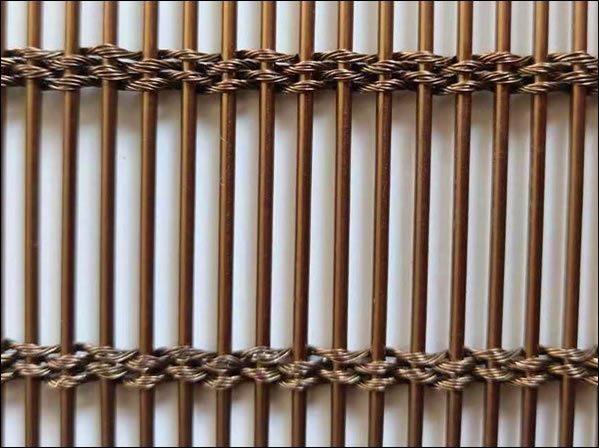
This decorative mesh features vertically aligned straight rods interwoven with twisted rope wires in a horizontal pattern. The bronze finish offers a warm metallic appearance suitable for interior partitions, wall panels, and ceiling decorations. Typical specifications include vertical rod diameters of 2.0 mm to 3.0 mm, rope wire thickness of 1.5 mm, and horizontal spacing of approximately 18 mm. The mesh allows filtered light and airflow while maintaining a structured, linear aesthetic.
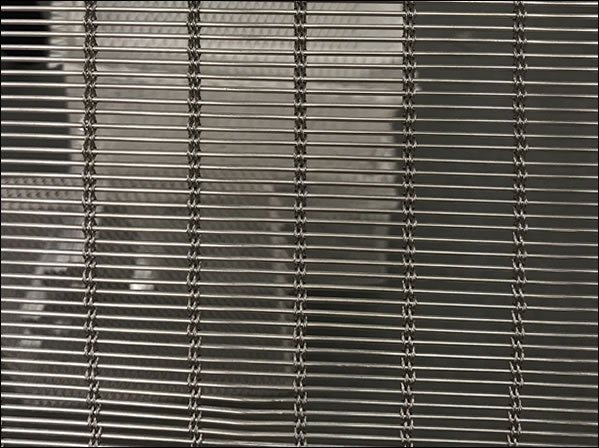
This panel displays fine stainless steel twisted rope wires running vertically, closely interlaced with narrow horizontal rods. It is ideal for use in elevator lobbies, wall coverings, and column enclosures. The mesh design provides semi-transparency with high tensile stability. Common dimensions include 1.2 mm rope wire diameter, 1.0 mm rod diameter, and spacing around 6 mm to 10 mm, offering a subtle texture suitable for modern indoor architectural finishes.
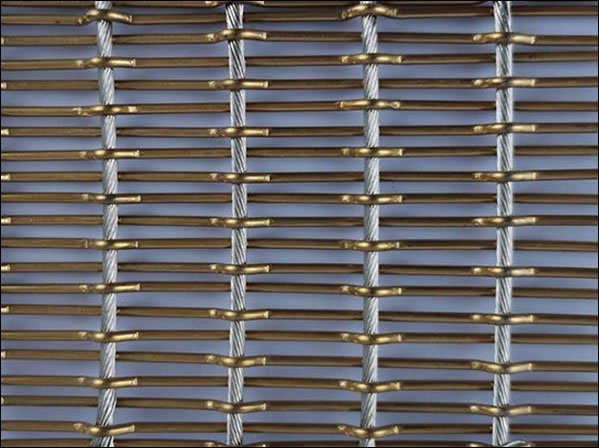
Combining flat golden horizontal rods with silver-toned twisted cable verticals, this mesh creates a decorative grid for upscale partitions and paneling. It delivers a contrast in color and texture, widely used in hospitality and corporate interiors. Wire diameters are typically 2.0 mm for the rods and 2.5 mm for the rope cables, with a mesh opening of about 12 mm x 20 mm, allowing partial visibility with strong architectural rhythm.
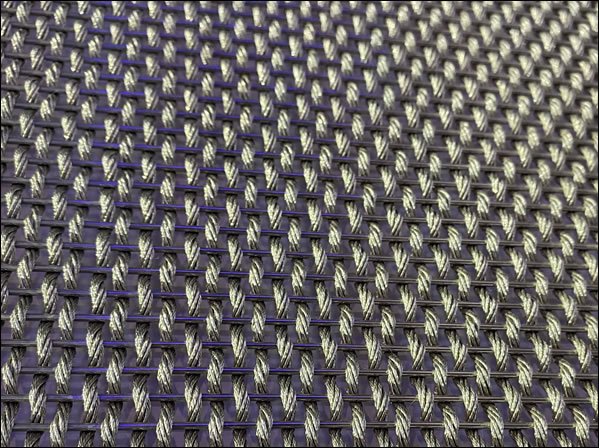
Shown at an angle, this architectural mesh combines tightly woven twisted cables with straight rods, forming a compact pattern that reflects light dynamically. It is well-suited for cladding, infill panels, or artistic installations. Wire diameter typically ranges from 1.2 mm to 2.0 mm, with square or slightly rectangular openings around 10 mm x 10 mm. The durable configuration offers high flexibility and resilience for both interior and exterior applications.
This decorative mesh features vertically oriented twisted cables intersected by flat horizontal rods, forming a square-grid pattern. It is frequently used for screen walls, railings, or staircase infills. The cable diameter usually measures 2.0 mm, while the rod thickness is about 1.5 mm. Openings between intersections average 15 mm x 15 mm, balancing strength with visual openness and achieving a modern industrial look.
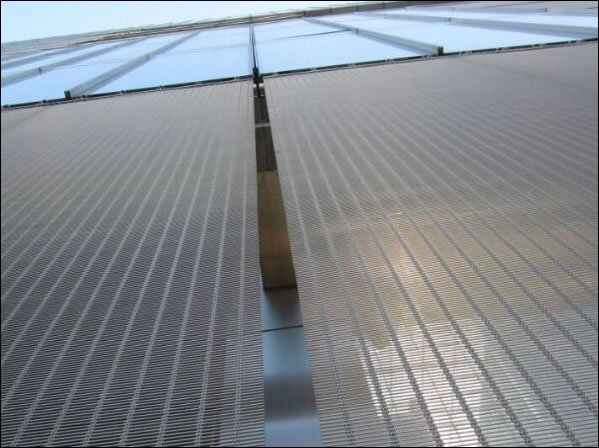
Installed on a building exterior, this wide-format wire mesh facade is composed of tensioned stainless steel cables and rods, forming a continuous vertical shading system. It serves functional purposes like solar control and wind screening while enhancing the building's appearance. Standard wire diameters range from 1.5 mm to 3.0 mm, with mesh pitches of 10 mm to 20 mm. It provides weather resistance, durability, and a refined architectural surface.